How to Select the Best Electronic Logging Device for Trucks

AChoosing an Electronic Logging Device (ELD) is no longer just about meeting Federal Motor Carrier Safety Administration regulations. Today’s ELDs can help fleets improve compliance, streamline operations, reduce paperwork, monitor driver behavior, and gain better visibility into their business.
However, with dozens of ELD options available, finding the right solution can quickly become overwhelming. Some providers focus only on Hours of Service (HOS) compliance, while others offer full fleet management platforms with GPS tracking, dash cameras, maintenance alerts, and dispatch tools.
This ELD buyers guide walks through everything
you need to know about how to choose an ELD, including the features that matter most, questions to ask providers, common red flags, and how the leading solutions compare in 2026.
What Is an ELD and Why Choosing the Right One Matters
Electronic Logging Devices automatically records a commercial driver’s driving time by connecting directly to the vehicle’s engine. These devices help drivers comply with FMCSA Hours of Service regulations while replacing paper logbooks with accurate electronic records.
Since the ELD mandate became fully enforced, motor carriers have adopted electronic logging across fleets of every size. But not every device delivers the same experience.
The right ELD should do more than satisfy compliance requirements. It should help dispatchers operate more efficiently, reduce administrative work, minimize violations, and give drivers an easy-to-use system they’ll actually appreciate.
Learning how to choose an ELD means looking beyond compliance and evaluating how each solution fits your daily operations.
Importance of ELDs in the Trucking Industry
ELDs have transformed fleet management by improving visibility, accountability, and operational efficiency.
Modern ELD systems help carriers:
- Stay compliant with FMCSA regulations
- Automatically record Hours of Service
- Reduce paperwork and manual log corrections
- Simplify roadside inspections
- Improve driver accountability
- Reduce logbook errors
- Increase fleet visibility through GPS tracking
- Provide valuable operational data for decision-making
Many ELD providers now combine compliance with telematics, AI safety tools, fuel reporting, maintenance scheduling, messaging, and driver performance monitoring.
As fleets continue adopting technology, choosing among today’s expanding ELD options has become an important long-term business decision.
How to Choose an ELD: 12 Factors Every Buyer Should Evaluate
If you’re researching how to choose an ELD provider, these are the twelve factors that should guide your decision.
FMCSA Registration
This should always be your starting point.
Every device you consider should appear on the FMCSA’s list of registered ELDs. Registration confirms that the provider has self-certified its product to meet federal technical specifications.
While registration is required, it doesn’t guarantee the product offers excellent reliability, support, or user experience.
Ease of Installation
Some systems require professional installation that can take hours.
Others offer true plug-and-play hardware that installs in just minutes by connecting to the vehicle’s diagnostic port.
The easier installation is, the less downtime you’ll have when adding vehicles or replacing hardware.
Driver Experience
Drivers interact with the ELD every day.
An intuitive mobile app makes logging duty status, certifying logs, responding to inspections, and reviewing Hours of Service much simpler.
Poor user interfaces often result in more support calls, driver frustration, and compliance mistakes.
When evaluating ELD options, ask drivers to test the mobile application whenever possible.
Reliability
Reliability affects every part of your operation.
Frequent disconnects, frozen applications, inaccurate GPS locations, or syncing issues can create unnecessary compliance headaches.
Look for providers with strong uptime records and dependable hardware that continues working in harsh trucking environments.
Compliance Features
Compliance extends well beyond electronic logs.
Look for features including:
- Automatic HOS tracking
- DVIR reporting
- IFTA mileage reporting
- Unassigned trip management
- Inspection mode
- Driver alerts
- Violation notifications
- Log editing workflows
The more compliance tasks your ELD automates, the less administrative work your office staff performs.
Fleet Management Features
Many businesses prefer solutions that combine compliance with fleet management.
Useful features include:
- Real-time GPS tracking
- Geofencing
- Driver messaging
- Vehicle diagnostics
- Maintenance reminders
- Fuel reporting
- Dispatch integration
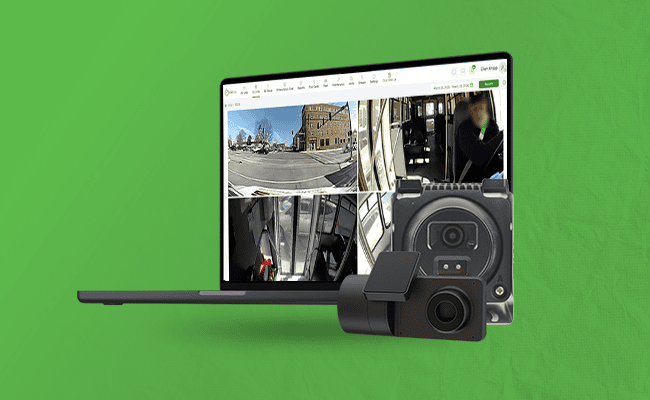
- Dash camera compatibility
- Asset tracking
Instead of purchasing multiple software subscriptions, integrated platforms often reduce overall costs.
Customer Support
Even the best technology occasionally requires assistance.
Evaluate:
- Support hours
- Phone availability
- Live chat
- Email response times
- Onboarding assistance
- Training materials
- Knowledge base resources
Responsive support becomes especially valuable during DOT inspections or unexpected technical issues.
Hardware Quality
Not all ELD hardware is built equally.
Quality hardware should:
- Maintain stable engine connections
- Resist vibration
- Perform in extreme temperatures
- Continue operating during long driving hours
- Require minimal replacements
Cheaper hardware often results in increased maintenance costs over time.
Software Updates
FMCSA regulations and operating systems continue evolving.
Your provider should regularly release updates that improve security, fix bugs, add new features, and maintain compatibility with Android and iOS devices.
Frequent updates also demonstrate that the provider actively invests in its product.
Pricing
Price matters—but it shouldn’t be the only consideration.
Compare:
- Hardware cost
- Monthly subscription
- Activation fees
- Contracts
- Installation charges
- Support fees
- Upgrade costs
Some inexpensive systems become far more expensive once hidden fees are added.
Scalability
Today’s five-truck fleet may become tomorrow’s fifty-truck operation.
Choose software that can grow alongside your business without requiring a complete migration.
Scalable systems allow you to add users, vehicles, cameras, and tracking devices as your fleet expands.
Company Reputation
Finally, research the provider itself.
Read customer reviews, examine case studies, evaluate years in business, and consider industry reputation.
Learning how to choose an ELD provider means evaluating the company behind the software—not just the software itself.
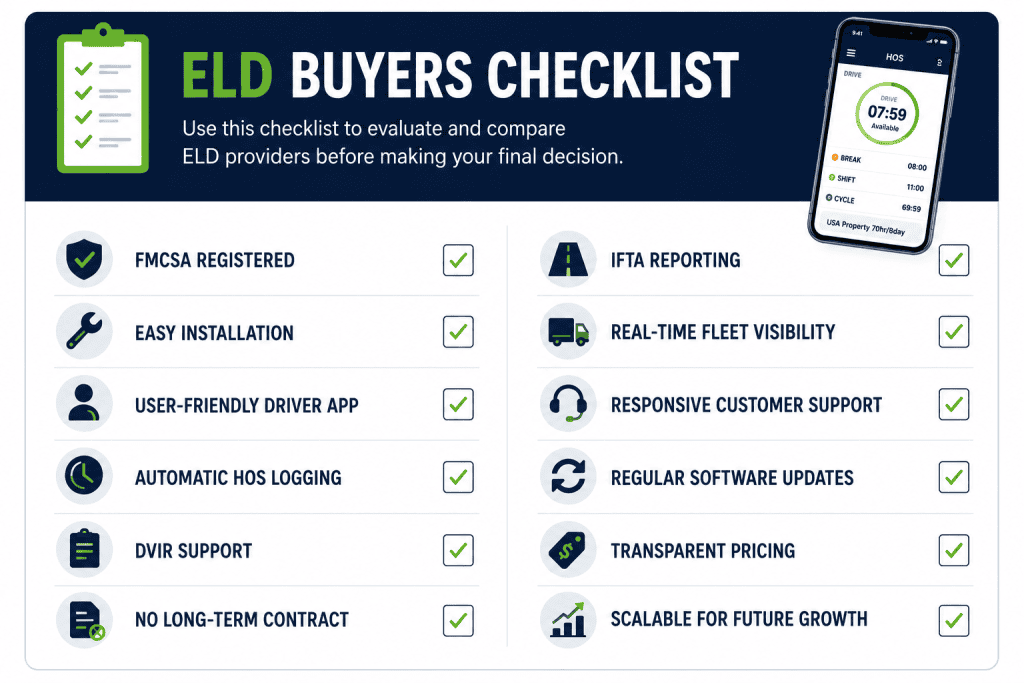
ELD Buyers Checklist
Before making a purchase, verify that your preferred solution checks these boxes:
- FMCSA registered
- Easy installation
- User-friendly driver app
- Reliable GPS tracking
- Automatic HOS logging
- DVIR support
- IFTA reporting
- Real-time fleet visibility
- Responsive customer support
- Regular software updates
- Transparent pricing
- Scalable platform for future growth
Questions to Ask Before Choosing an ELD
Before signing a contract, ask each provider:
- Is your ELD FMCSA registered?
- Are there long-term contracts?
- How long does installation take?
- What happens if the device loses connection?
- What support is available after business hours?
- How often is the software updated?
- Can the platform integrate with my dispatch software?
- What fleet management features are included?
- Are there hidden fees?
- Can I upgrade as my fleet grows?
These questions often reveal significant differences between competing ELD options.
Red Flags When Comparing ELD Providers
Watch for warning signs during your evaluation.
Some common red flags include:
- Long contracts with expensive cancellation fees
- Outdated mobile applications
- Poor online reviews
- Limited customer support
- Hidden pricing
- Few software updates
- Slow GPS refresh rates
- Difficult installation
- Limited compliance features
- No product demonstrations
If a provider struggles during the sales process, support after purchase may be even more challenging.
Comparing Different Types of ELD Solutions
There is no one-size-fits-all ELD. The best choice depends on your fleet size, budget, operational complexity, and future growth plans. Below is a comparison of some of the most popular providers in 2026.
GPSTab (Top Pick)
GPSTab is an excellent choice for owner-operators, small fleets, and growing carriers looking for an affordable, easy-to-use ELD without sacrificing functionality.
Unlike many providers that lock customers into lengthy contracts, GPSTab offers flexible pricing and plug-and-play hardware that can be installed in minutes. The platform goes beyond basic Hours of Service compliance by combining ELD functionality with GPS fleet tracking, maintenance reminders, IFTA reporting, driver messaging, geofencing, AI dash cameras, and asset tracking.
Key benefits include:
- FMCSA-registered ELD
- Plug-and-play installation
- No long-term contracts
- Real-time GPS tracking
- AI-powered dash camera compatibility
- Driver behavior monitoring
- IFTA mileage reporting
- Vehicle maintenance alerts
- Responsive customer support
For fleets that want a reliable solution without enterprise-level pricing, GPSTab offers one of the strongest overall value propositions available today.
Motive
Motive has become one of the most recognized names in fleet technology by offering a comprehensive platform that combines ELD compliance, AI safety, vehicle telematics, and spend management.
Its feature-rich ecosystem makes it well suited for medium to large fleets, though smaller carriers may find the pricing higher than necessary if they only need compliance features.
Best for: Fleets looking for an all-in-one operations platform with advanced AI capabilities.
Samsara
Samsara is known for enterprise fleet management and advanced analytics. In addition to ELD compliance, the platform includes video telematics, environmental monitoring, asset tracking, maintenance management, and extensive reporting tools.
Its scalable platform is ideal for large fleets managing hundreds or thousands of vehicles, although its pricing may be more than many small businesses require.
Best for: Enterprise fleets with complex operational needs.
Geotab
Geotab focuses heavily on telematics and data analytics. Its open platform integrates with hundreds of third-party applications, making it popular among organizations with specialized workflows.
The software provides excellent reporting, diagnostics, and fleet insights, though new users may experience a steeper learning curve compared to simpler platforms.
Best for: Data-driven fleets that require extensive integrations and reporting.
Verizon Connect
Verizon Connect combines GPS fleet tracking, route optimization, maintenance monitoring, and ELD compliance into a single platform.
It offers strong location intelligence and operational visibility, making it a good fit for businesses managing mixed fleets across multiple industries.
Best for: Companies prioritizing fleet visibility and route optimization.
How Much Does an ELD Cost in 2026?
ELD pricing varies depending on the provider, hardware, and included features.
Most fleets can expect the following costs:
| Cost Component | Typical Price |
| ELD Hardware | $100–$300 per vehicle |
| Monthly Service | $20–$40 per vehicle |
| Professional Installation (if required) | $0–$200 |
| AI Dash Cameras (optional) | Additional monthly fee |
| Asset Tracking (optional) | Additional monthly fee |
Some providers bundle hardware into monthly subscriptions, while others require an upfront purchase.
When comparing providers, look beyond the advertised monthly price. Ask about activation fees, shipping costs, replacement hardware, premium support, software upgrades, and contract requirements. A slightly higher monthly subscription may ultimately provide better value if it includes more features and eliminates hidden charges.
Why Many Fleets Choose GPSTab
When evaluating ELD options, many fleets choose GPSTab because it balances affordability, compliance, and operational efficiency.
Rather than offering only electronic logs, GPSTab provides a complete fleet management solution that grows with your business. Whether you’re operating a single truck or managing an expanding fleet, the platform includes the tools needed to stay compliant while improving day-to-day operations.
Some reasons fleets choose GPSTab include:
- Affordable pricing with no long-term contracts
- Quick plug-and-play installation
- Simple driver experience
- Reliable GPS tracking
- Built-in compliance tools
- AI dash camera integration
- Fleet maintenance tracking
- Asset tracking capabilities
- Responsive U.S.-based customer support
- Regular software improvements
For businesses wondering how to choose the right ELD, GPSTab delivers an excellent balance of features, usability, and long-term value.
Making the Final Decision
Choosing an ELD shouldn’t come down to price alone.
The right solution should make compliance easier while helping your business become more efficient. Before making your final decision:
- Schedule a live demo.
- Test the driver app.
- Read independent customer reviews.
- Compare contract terms.
- Verify FMCSA registration.
- Calculate the total cost of ownership.
- Consider the features you’ll need as your fleet grows.
Spending a little more time evaluating providers today can save significant time, money, and frustration in the future.
Final Thoughts: How to Choose the Right ELD for Your Fleet
Learning how to choose an ELD requires looking beyond basic compliance. The best providers combine reliable hardware, intuitive software, responsive support, and fleet management tools that help your business operate more efficiently.
As you compare different ELD options, focus on long-term value rather than simply finding the lowest monthly price. A dependable ELD can reduce administrative work, improve driver satisfaction, simplify compliance, and provide better visibility into your fleet’s performance.
Whether you’re an owner-operator purchasing your first device or a growing carrier upgrading an existing system, taking the time to evaluate your options carefully will help ensure you invest in a solution that supports your business for years to come.
Frequently Asked Questions
What should I look for when buying an ELD?
Look for FMCSA registration, reliable hardware, an easy-to-use driver app, strong customer support, automatic Hours of Service tracking, GPS fleet tracking, compliance features, transparent pricing, and software that can scale as your fleet grows.
Is every FMCSA-registered ELD equally good?
No. FMCSA registration only confirms that a provider has certified its device to meet federal technical specifications. It does not guarantee reliability, customer service, ease of use, or feature quality. That’s why understanding how to choose an ELD involves evaluating much more than compliance alone.
What features are most important in an ELD?
The most important features include:
- Automatic HOS tracking
- Real-time GPS tracking
- DVIR reporting
- IFTA mileage reporting
- Driver messaging
- Maintenance reminders
- Vehicle diagnostics
- Mobile app usability
- Compliance alerts
- Responsive customer support
The right combination of features depends on your fleet size, budget, and operational goals, but prioritizing reliability and ease of use will help you get the most value from your investment.