Artificial intelligence is transforming nearly every industry, and transportation is no exception. Today’s fleets generate enormous amounts of data—from GPS locations and engine diagnostics to driver activity and fuel consumption. The challenge isn’t collecting information anymore; it’s knowing how to turn it into smarter decisions.
That’s where AI in fleet management comes in. By analyzing large datasets in seconds, AI helps fleets reduce costs, improve efficiency, increase safety, and automate time-consuming processes. Whether you operate five vehicles or five hundred, AI-powered technology can help you make faster, more informed decisions without adding complexity to your daily workflow.
In this guide, we’ll explain what AI in fleet management is, explore the most valuable applications, discuss how the technology works behind the scenes, and show you what to look for when choosing an AI-powered platform.
What Is AI in Fleet Management?
AI in fleet management refers to the use of artificial intelligence technologies to automate tasks, analyze operational data, identify patterns, and provide recommendations that improve fleet performance.
Unlike traditional software that simply displays information, AI actively interprets data. It can identify maintenance issues before they cause breakdowns, recommend more efficient routes, recognize unsafe driving habits, and automate repetitive administrative work.
Modern AI fleet management platforms combine information from multiple sources, including:
- GPS tracking
- Vehicle telematics
- Engine diagnostics
- Electronic Logging Devices (ELDs)
- Dash cameras
- Fuel card transactions
- Maintenance records
- Dispatch and routing systems
By continuously learning from historical and live data, AI helps fleet managers spend less time reacting to problems and more time preventing them.
How Is AI Used in Fleet Management?
Many fleet managers ask, how is AI used in fleet management on a day-to-day basis?
Rather than replacing existing systems, AI enhances them by processing thousands of data points simultaneously. It detects trends that would be nearly impossible for a person to identify manually.
For example, AI can:
- Predict when vehicles require service
- Optimize delivery routes
- Analyze driver performance
- Identify fuel waste
- Detect potential compliance issues
- Prioritize dispatch decisions
- Automate paperwork and document processing
- Improve scheduling based on historical traffic patterns
Instead of relying solely on historical reports, AI gives fleet managers recommendations based on continuously changing operating conditions.
Top Use Cases of AI in Fleet Management
The following represent some of the top use cases of AI in fleet management and commercial transportation fleets alike.
Predictive Maintenance
Unexpected breakdowns are expensive. They increase repair costs, delay deliveries, create customer frustration, and reduce vehicle availability.
Predictive maintenance uses AI to analyze:
- Engine fault codes
- Mileage
- Engine hours
- Vehicle age
- Maintenance history
- Driving conditions
Rather than following fixed maintenance schedules, AI predicts when individual vehicles actually need service.
This proactive approach helps fleets:
- Reduce roadside breakdowns
- Extend vehicle lifespan
- Lower repair expenses
- Improve vehicle uptime
Many fleets now rely on predictive maintenance models that continuously improve as additional vehicle data becomes available.
Intelligent Route Optimization

Traditional routing software typically focuses on the shortest distance.
AI takes routing much further by considering:
- Current traffic
- Historical congestion
- Weather
- Driver Hours of Service
- Delivery priorities
- Vehicle restrictions
- Customer appointment windows
The result is more efficient routing that minimizes delays while maximizing vehicle utilization.
AI Driver Behavior Analysis
Every driver has unique habits. Some accelerate aggressively, while others frequently idle or brake harshly.
AI automatically evaluates driver behavior by analyzing patterns such as:
- Speeding
- Rapid acceleration
- Hard braking
- Harsh cornering
- Seatbelt usage
- Excessive idling
- Fatigue indicators
Rather than generating overwhelming reports, AI highlights the highest-risk drivers and recommends targeted coaching opportunities.
Improving driver behavior not only reduces accidents but also lowers maintenance and fuel costs.
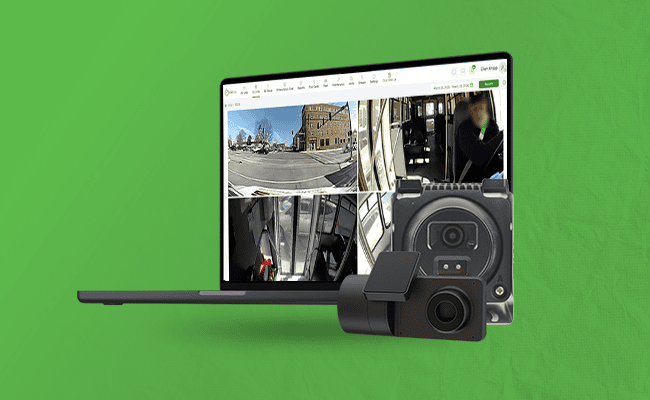
AI Dashcams
Modern AI-powered dash cameras do far more than record video.
They can recognize:
- Distracted driving
- Following too closely
- Lane departures
- Stop sign violations
- Cell phone use
- Forward collision risks
- Driver fatigue
When risky events occur, the system provides immediate alerts that allow drivers to correct their actions before incidents happen.
Beyond coaching, AI dashcams also provide valuable evidence that helps protect drivers during accident investigations and insurance claims.
Fuel and Emissions Optimization
Fuel remains one of the largest operating expenses for most fleets.
AI identifies opportunities to reduce fuel consumption by monitoring:
- Idle time
- Speed consistency
- Route efficiency
- Engine performance
- Vehicle utilization
- Traffic patterns
Because AI continuously evaluates operating conditions, it can recommend changes that reduce fuel usage while lowering emissions.
Load Optimization
Empty miles and poorly distributed loads reduce profitability.
AI evaluates shipment data to recommend:
- Better trailer utilization
- More efficient load assignments
- Reduced deadhead miles
- Improved dispatch planning
For carriers managing multiple shipments each day, these recommendations can significantly improve asset utilization while reducing transportation costs.
AI and Machine Learning in Fleet Management: What’s Actually Under the Hood
When people hear artificial intelligence, they often imagine futuristic technology making decisions independently.
In reality, AI and machine learning in fleet management rely on sophisticated mathematical models trained using large datasets.
The process typically follows these steps:
- Vehicles collect operational data.
- Sensors transmit information to cloud platforms.
- AI algorithms analyze patterns.
- Machine learning models improve prediction accuracy over time.
- The software generates recommendations or automates decisions.
Unlike traditional programming, machine learning doesn’t require developers to manually write every rule. Instead, the system continuously improves as it processes additional data from vehicles and operations.
Benefits of AI in Fleet Management
The benefits of AI in fleet management extend well beyond automation.
Organizations commonly experience improvements in:
- Reduced operating costs
- Increased vehicle uptime
- Improved maintenance planning
- Better dispatch efficiency
- Faster administrative workflows
- Lower accident rates
- Higher customer satisfaction
- More accurate forecasting
- Improved compliance monitoring
- Better decision-making through real-time data
Instead of spending hours reviewing spreadsheets, managers receive prioritized insights that help them focus on the issues with the greatest operational impact.
Challenges and Limitations of AI in Fleet Management
Although AI delivers significant value, implementation isn’t without challenges.
Some common obstacles include:
Data Quality
AI performs best when it has access to accurate, complete data. Poor GPS information, inconsistent maintenance records, or incomplete driver logs can reduce prediction accuracy.
Integration
Many fleets operate multiple software platforms that don’t communicate with each other. Successful AI implementations often require integrating telematics, dispatch, accounting, and maintenance systems.
Change Management
Introducing AI often changes existing workflows. Employees may require training to understand recommendations and trust automated insights.
Initial Investment
Although AI typically produces long-term savings, organizations must evaluate implementation costs, hardware requirements, and subscription fees before deployment.
AI vs. Traditional Fleet Management
Traditional software primarily records information.
AI analyzes that information and recommends actions.
| Traditional Systems | AI-Powered Systems |
| Historical reporting | Predictive insights |
| Manual scheduling | Automated optimization |
| Fixed maintenance intervals | Predictive maintenance scheduling |
| Static routes | Dynamic routing |
| Manual analysis | Automated recommendations |
| Reactive management | Proactive decision-making |
The difference isn’t simply automation—it’s the ability to continuously improve operations through intelligent analysis.
Fleet Management AI Software: What Features Matter?
Not every AI platform delivers the same capabilities.
When evaluating fleet management AI software, look for features such as:
- Predictive maintenance analytics
- AI-powered route optimization
- Driver coaching tools
- AI dashcam integration
- Automated alerts
- Maintenance forecasting
- Fuel analytics
- Document automation
- Reporting dashboards
- Open API integrations
- Mobile accessibility
- Scalable architecture
Choosing software that combines multiple AI capabilities into a single platform often simplifies implementation and reduces operational complexity.
How to Implement AI in Your Fleet: A Step-by-Step Roadmap

Successfully adopting AI in fleet management doesn’t happen overnight. A structured implementation plan helps maximize return on investment.
Step 1: Identify Operational Challenges
Determine whether your biggest opportunities involve maintenance, routing, safety, fuel costs, compliance, or administrative work.
Step 2: Collect Reliable Data
AI depends on quality data from telematics devices, GPS systems, maintenance records, and dispatch software.
Step 3: Start with One Use Case
Rather than deploying AI across every department simultaneously, begin with a high-impact application such as maintenance forecasting or route optimization.
Step 4: Train Your Team
Drivers, dispatchers, mechanics, and managers should understand how AI recommendations support—not replace—their expertise.
Step 5: Measure Performance
Track KPIs such as fuel usage, repair costs, downtime, delivery performance, and accident frequency to evaluate results.
As confidence grows, additional AI solutions for fleet management can be introduced across other areas of the business.
Choosing an AI Fleet Management Platform: What to Look For
Selecting the right platform requires more than comparing feature lists.
Consider:
- Ease of implementation
- Scalability
- Integration capabilities
- User-friendly dashboards
- Mobile support
- Reporting flexibility
- Customer support
- Security standards
- Future AI development roadmap
The best platforms also continue expanding their AI capabilities over time, allowing businesses to adopt new features without replacing existing systems.
Additionally, organizations should evaluate whether vendors offer specialized AI tools for fleet management, including intelligent reporting, automated document processing, and advanced safety analytics.
The Future of AI in Fleet Management
Artificial intelligence continues to evolve rapidly.
Future developments may include:
- Fully automated dispatch recommendations
- Autonomous maintenance scheduling
- Advanced predictive demand forecasting
- Smarter fuel purchasing strategies
- Improved insurance risk analysis
- AI-powered compliance monitoring
- Natural language reporting assistants
- Increased integration with connected vehicles
As vehicle connectivity grows, AI in fleet management will become even more accurate, proactive, and valuable.
Why Businesses Choose GPSTab for AI-Ready Fleet Management
Successful AI begins with reliable operational data.
GPSTab provides the visibility businesses need by combining GPS tracking, telematics, ELD compliance, AI-enabled dash cameras, maintenance monitoring, and reporting into one connected platform.
Rather than overwhelming managers with data, GPSTab helps transform information into actionable insights that improve fleet management, reduce downtime, increase driver safety, and support smarter decision-making.
As AI capabilities continue expanding across the transportation industry, businesses using connected platforms today will be better positioned to adopt new innovations tomorrow.
Final Thoughts
Artificial intelligence is no longer a future technology reserved for the largest transportation companies. Today’s fleets of every size can benefit from AI-powered maintenance forecasting, intelligent routing, automated safety monitoring, and smarter operational analytics.
As AI in fleet management continues to mature, organizations that embrace data-driven decision-making will be better equipped to improve efficiency, reduce operating costs, and stay competitive in an increasingly demanding transportation industry.
Whether you’re just beginning your AI journey or expanding existing capabilities, investing in intelligent technology today can create measurable operational improvements for years to come.
FAQs
What is AI fleet management?
AI fleet management uses artificial intelligence to analyze vehicle, driver, and operational data in order to automate decisions, identify trends, predict maintenance needs, improve routing, and optimize overall fleet performance.
How is AI used in fleet management?
AI is used to automate dispatch decisions, predict maintenance issues, optimize route planning, analyze vehicle performance, monitor fuel usage, improve driver coaching, process operational data, and generate recommendations that help fleet operations becomes more efficient.
Is AI fleet management expensive to implement for a small fleet?
Not necessarily. Many cloud-based AI platforms offer scalable pricing that allows small fleets to begin with core capabilities before expanding over time. The operational savings often offset implementation costs.
Can AI replace fleet managers?
No. AI is designed to support fleet managers—not replace them. It automates repetitive analysis and provides recommendations, while human managers continue making strategic decisions, managing employees, handling customer relationships, and responding to situations that require experience and judgment.